

The History of Gold, Simplified

Gold has captured human attention for thousands of years. Before banks, before paper money, before any modern system we rely on today, people turned to gold as something they could trust and hold onto.
Now, with gold back in the spotlight, it’s the perfect time to understand where that trust comes from—and why it hasn’t gone away.

Where Gold Comes From

Gold didn’t originally come from Earth. Scientists believe it was formed during massive cosmic events, like exploding stars, and later delivered here by meteorites.

Once on Earth, gold settled into rocks and riverbeds. Early humans didn’t need tools to find it—they could simply spot it in streams as shiny yellow nuggets.

That’s part of what made gold special from the start. It was easy to recognize and didn’t require advanced technology to collect.
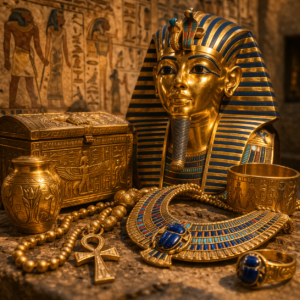
The First People to Use Gold

Gold was one of the first metals ever used by humans.

Unlike iron or copper, gold doesn’t rust or tarnish. It stays the same over time. It’s also soft, which makes it easy to shape into jewelry and decorative items.

Early civilizations didn’t use gold as money yet. They used it to show status, power, and importance.

To early humans, it likely stood out right away—this was a metal that didn’t fade, was easy to work with, and looked unlike anything else they had seen.

Gold in Ancient Civilizations

Some of the earliest and most famous uses of gold come from ancient Egypt.Gold was seen as something divine—something connected to the gods and the afterlife. Pharaohs were buried with gold masks, jewelry, and treasures.

Other civilizations around the world used gold in similar ways. It became a symbol of wealth, authority, and beauty.

No matter where you look—Egypt, Asia, or early Europe—gold always carried meaning beyond just its appearance.
When Gold Became Money

At some point, gold shifted from decoration to something much bigger—money.

Before this, people traded goods directly. But that system had problems. Not everything was easy to exchange.

Gold solved that. It had all the qualities of good money:

  • It was rare
  • It was easy to carry
  • It could be divided into smaller pieces
  • It didn’t wear down over time

Around 550-600 BC, the first gold coins were created. This made trade faster, easier, and more reliable. Before gold coins, trading could be messy. Trading meant finding someone who wanted exactly what you had—and agreeing on what it was worth. That wasn’t always easy.

Imagine trying to trade a bag of grain for a tool—you’d have to find someone who needed exactly what you had and agree on what it was worth.

With gold, that problem was mostly solved. Even if the exact amount still had to be agreed on, both sides already understood they were trading something worth having.

From there, gold became the foundation of many economies across the world.

Gold Rushes Changed Everything

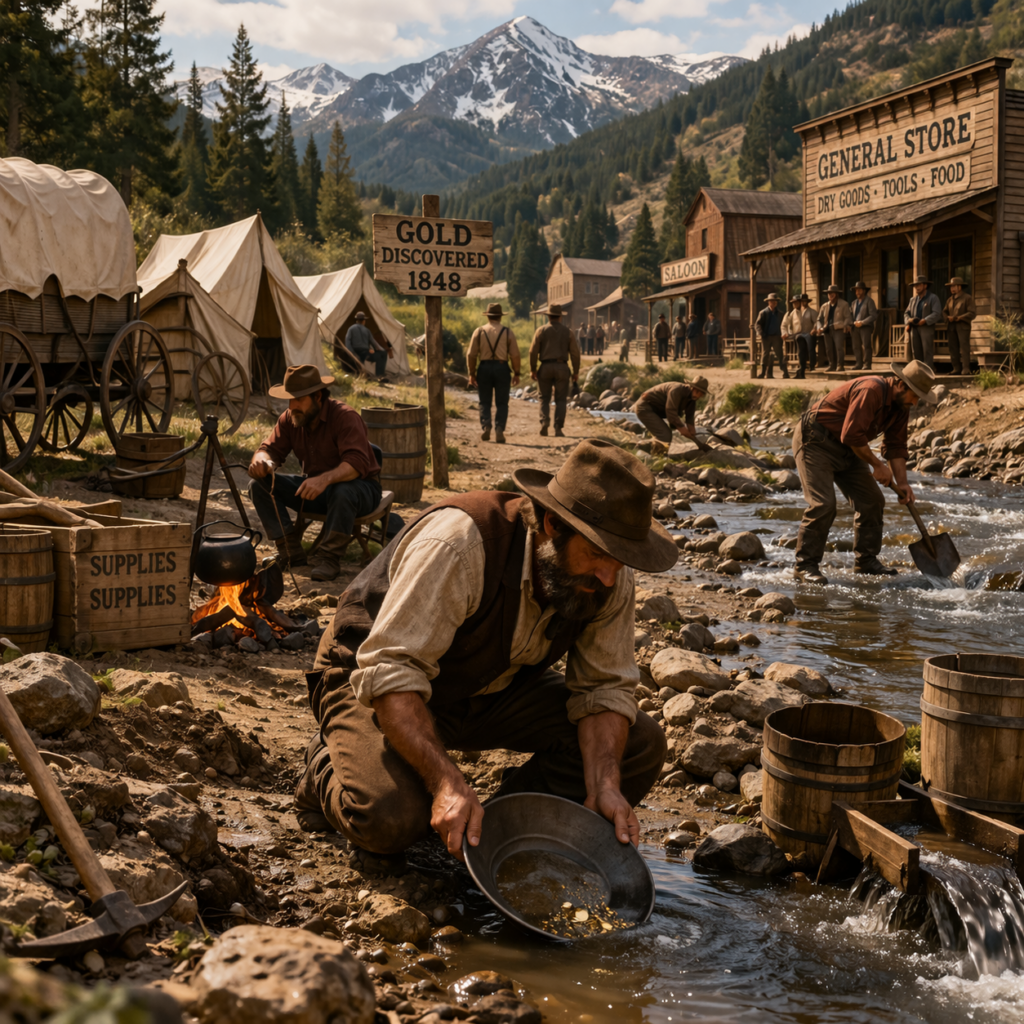
Fast forward thousands of years, and gold was still driving major events. In the 1800s, massive gold discoveries triggered global migrations. People left their homes chasing opportunity and wealth.

One of the most famous examples is the California Gold Rush, where thousands of people flooded into California hoping to strike it rich.

Another major event was the Klondike Gold Rush in Canada which drew over 100,000 prospectors to the Yukon in the late 1890s, transforming remote areas into booming hubs almost overnight.

Entire cities were built almost overnight. Businesses grew rapidly. Economies shifted.

Gold didn’t just hold value—it created new opportunity.

Gold and Modern Money

For a long time, gold wasn’t just valuable—it actually backed entire currencies.
Countries used what’s known as the gold standard, where paper money could be exchanged for a fixed amount of gold. Many countries adopted the gold standard because it made trade more stable and predictable. 
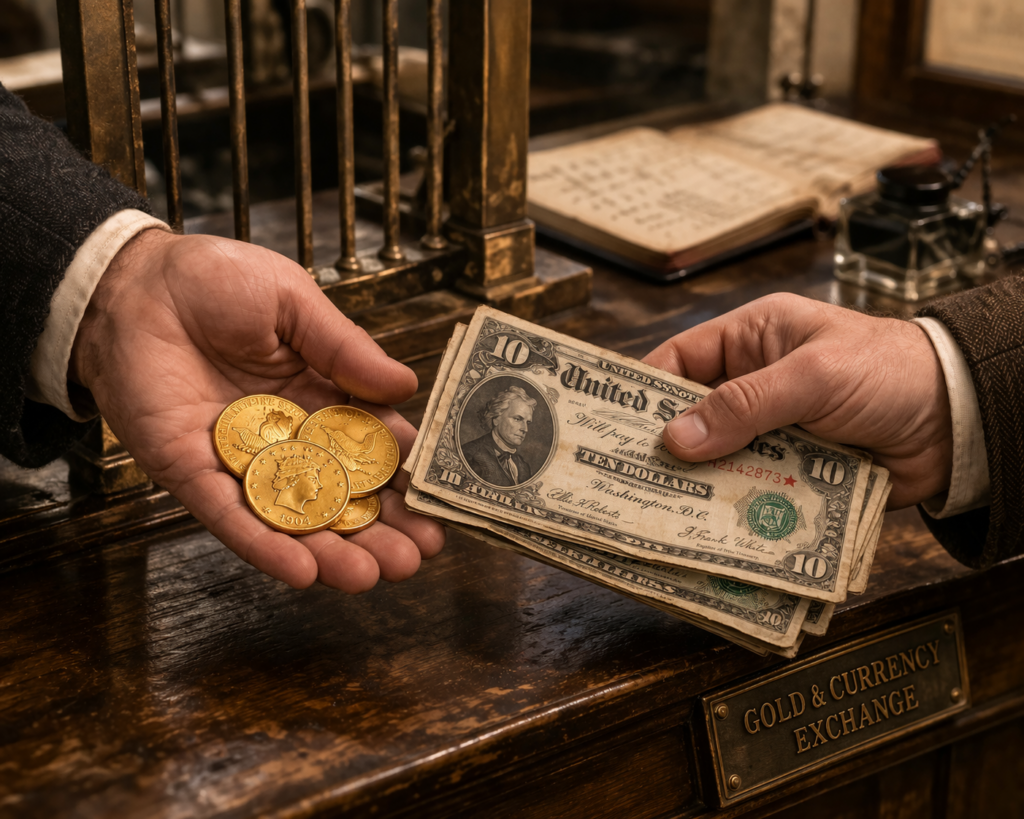
Gold being exchanged for paper currency

If different countries all tied their currencies to gold, it became much easier to exchange money and do business across borders. It also helped limit how much money governments could print, which built trust in the system.

In the United States, each dollar was once tied to a specific amount of gold held in reserve. This gave people confidence that their money had real, tangible value behind it. Essentially, you could walk into a bank with paper money and exchange it for gold—and bring gold in to receive paper money. The value was set, so people knew exactly what they were getting.

But over time, the system became harder to manage. Governments needed more flexibility, especially during economic crises. In 1971, the United States officially ended the direct link between the dollar and gold, marking a major shift toward the modern financial system we use today.

Why Gold Still Matters Today

Today, money is no longer backed by gold in the same way, so why do so many people still trade it? Because gold never lost its reputation.

People turn to gold when times feel uncertain. Inflation can weaken currencies, markets can shift quickly, and government decisions can impact the economy. When confidence drops, people look for something more stable—like gold.

Unlike other currencies, gold:

  • Can’t be printed or created on demand
  • Holds its value over long periods of time
  • Is recognized and accepted around the world
  • Exists independently of any government or system
  • Has a limited supply, which helps protect its value

Gold doesn’t rely directly on a company, a government, or a system to hold its value. It simply exists—and people trust it.

What Affects the Price of Gold Today

Gold has always had value, but its price still moves over time. While it’s not something most people need to track daily, it helps to understand what drives those changes.

Here are a few of the main factors:

Supply and Demand

Like anything else, gold prices are influenced by how many people are buying versus selling. When demand increases—whether from investors, jewelers, or central banks—prices tend to rise. When demand slows down, prices can level off or drop.

Inflation

When money loses purchasing power, people often look for ways to protect their value. For example, during periods of higher inflation, gold prices have historically trended upward as more people move into it as a store of value.

Global Uncertainty

During major events—like financial crises or global conflicts—gold demand often increases. For example, during the 2008 financial crisis and again in 2020, gold prices saw strong increases as investors looked for safer assets.

Central Banks

Governments and central banks hold large amounts of gold. When they buy more, it increases demand. When they sell, it can add supply to the market. These moves can have a noticeable impact on prices.

Gold prices can go up or down in the short term, but these underlying factors help explain why. Over the long run, what’s remained consistent is how people view gold—as something stable, widely recognized, and worth holding onto.

Final Thoughts

Gold has been trusted for thousands of years. From ancient civilizations to modern markets, it has always held a place as something valuable, reliable, and widely accepted.

What makes gold unique is its consistency. While systems change and currencies come and go, gold has remained.

That’s why, even today, people continue to buy it, hold it, and sell it. That’s why it still plays a role today—not because it’s new, but because it has stood the test of time.

If you have gold and are curious what it’s worth, you can always bring it in and have it looked at. Whether you’re selling, buying, or just want more information, we’re here to help!

Fancy Jewelry Logo

Fancy JL

LICENSE # BL11861

17017 Hawthorne Blvd
Lawndale, California 90260

or…

Call or Text us: